
AC Installation in Fayetteville for New Homes and Renovations
Building a new home or remodeling an older one comes with a long list of decisions, and the air conditioning system is one of the few that affects comfort every single day. The paint may be perfect, the floors may shine, and the kitchen may feel like a magazine spread, but if the home cools unevenly, struggles in peak heat, or runs up the power bill, the whole project starts to feel unfinished. That is why AC installation in Fayetteville deserves the same attention as framing, insulation, plumbing, and electrical work. When the system is selected and installed correctly, it disappears into the background and simply does its job. When it is rushed, guessed at, or sized poorly, the problems show up fast.
Fayetteville homeowners know the local climate asks a lot from an HVAC system. Hot, humid stretches can linger, and temperature swings can be hard on older equipment or short-sighted installations. New construction offers a chance to get everything right from the start. Renovations create a different kind of opportunity, because a well-planned upgrade can solve long-standing comfort problems that have been tolerated for years. In both cases, the right HVAC contractor in Fayetteville makes a measurable difference, not just in comfort, but in efficiency, humidity control, noise, and long-term reliability.
Why installation decisions matter more than most people realize
People often think about air conditioning in terms of brand names or tonnage, but installation quality is just as important as the equipment itself. A high-end unit installed badly can perform worse than a midrange system installed with care. I have seen new homeowners disappointed because the bedrooms stayed warm at night, even though the system was technically “new.” The issue usually was not the machine. It was duct design, static pressure, thermostat placement, or a system that was sized from a rough guess instead of a proper load calculation.
That matters even more in Fayetteville, where humidity can make a home feel warmer than the thermostat says. A system that cools quickly but shuts off too soon may leave the house clammy. Another system might run constantly because it was sized too small or because the ductwork leaks conditioned air into the attic. These are not abstract problems. They show up as higher bills, restless sleep, condensation, uneven temperatures, and repeated service calls. Homeowners looking for AC installation in Fayetteville should expect more than a quick equipment swap. They should expect a design process that takes the house itself seriously.
Renovations add another layer. Maybe walls are coming down, square footage is changing, or a finished attic is being converted into a bedroom. Those changes alter the heating and cooling load of the home. If the HVAC plan does not change with the building plan, the result can be a beautiful room that is miserable in July. That is where a skilled installer earns their keep, by reading the house as it exists now, not as it existed before the remodel.
New homes need more than a new condenser
A brand-new house can still have AC problems if the system is treated as an afterthought. Builders are often juggling schedules, inspections, and subcontractors, and HVAC may be installed before the homeowner has had a chance to think through how the home will actually be used. Bedrooms over garages, open-concept living areas with high ceilings, bonus rooms, and sun-heavy windows all affect the cooling load.
A proper installation starts with the numbers. The home needs a load calculation, not a rule-of-thumb estimate based on square footage alone. Two houses with the same footprint can need very different systems if one has spray foam insulation, low-E windows, and shaded exposures while the other has large west-facing glass and modest attic insulation. The right HVAC contractor in Fayetteville will ask about the envelope of the house, insulation levels, orientation, and occupancy patterns. That information leads to a system that is matched to the house, not to a sales formula.
Ductwork deserves the same scrutiny. In new construction, it is easier to design ducts that are properly sized, sealed, and routed. That opportunity should not be wasted. I have seen homes where the ductwork was installed neatly but not thoughtfully, leaving long runs, sharp turns, and rooms starved for airflow. A house can look finished and still be underperforming because the air path is inefficient. Once drywall goes up, those mistakes get expensive to fix. That is why AC installation in Fayetteville for new homes should be part of the construction conversation early, not tacked on near the end.
Thermostat placement also matters. A thermostat on a wall with direct sun, near a supply vent, or beside a kitchen can create misleading readings. The system then cycles at the wrong time. This is one of those small details that can create a disproportionate amount of frustration. A thoughtful installer will consider where the control lives and how the family actually uses the space.
Renovations are where experience shows
Renovations are often more complicated than new construction because the system has to work around what already exists. Walls may stay in place, the attic may be tight, or the crawlspace may limit access. Sometimes a homeowner is adding a primary suite, finishing a fayettevillehvac.com basement, or opening up a floor plan that used to be chopped into small rooms. Each of those changes affects airflow and comfort in a different way.
One common challenge is tying new space into an older system that was never designed for the added load. A renovated sunroom or bonus room may become the hottest place in the house if the original equipment was stretched to capacity years ago. The answer is not always a bigger unit. Sometimes the better fix is zoning, better duct balancing, or a separate system for the new area. That is where judgment matters. A careful installer will look at the full picture instead of making the easiest sale.
Another issue is hidden wear. During renovation work, damaged ducts, weak insulation, or undersized returns often come to light. Homeowners who expected a simple upgrade sometimes discover that the existing system has been compensating for years. That can be frustrating, but it is also useful. Renovation is the best time to fix problems that would be impossible or costlier to address later. If the attic is open, the walls are exposed, or the floors are lifted, there is a rare chance to improve comfort at the source.
Homeowners often ask whether they should repair the existing unit or replace it during a remodel. There is no universal answer. If the equipment is relatively new, properly sized, and still has useful life left, a redesign of the distribution system may be enough. If the unit is old, inefficient, or already has a history of service calls, replacement may make more sense financially and practically. A trusted provider of AC Repair in Fayetteville can help separate a temporary fix from a long-term solution. In many renovation projects, I have seen repairs used as a bridge while the family finalizes a broader upgrade plan.
The details that separate a good install from a frustrating one
Good installation work tends to look simple after the fact, which is part of the challenge. The best systems do not call attention to themselves. They cool evenly, start and stop smoothly, and keep humidity under control without constant tinkering. That quiet success usually comes from several unglamorous decisions made before the first screw is tightened.
Sizing the system correctly
Oversized systems are common, and they create real problems. A unit that is too large cools the house quickly, then shuts off before it has time to remove enough humidity. The space may feel cool but sticky. Short cycling also adds wear on components. Undersized units have the opposite issue. They run too long, struggle on the hottest afternoons, and can never quite catch up. The goal is not the biggest system available. The goal is the system that fits the actual demand of the home.
Sealing and insulating the ductwork
Leaky ducts waste conditioned air and can pull attic or crawlspace air into the system. That affects comfort and efficiency at the same time. In older homes, I often find returns that are undersized or ducts that have been patched over the years instead of sealed properly. During installation, it is worth taking the time to make sure connections are tight, runs are supported, and insulation is adequate in unconditioned spaces.
Managing airflow room by room
A strong system still fails if the rooms do not receive the right amount of air. Bedroom comfort, upstairs heat, and back-of-house hot spots often trace back to poor airflow distribution. Balancing dampers, return placement, and duct sizing all play a role. These are not cosmetic details. They determine whether one room feels like a refuge while another becomes unbearable.
Considering humidity as well as temperature
A homeowner can set a thermostat to 72 degrees and still feel uncomfortable if humidity is high. Fayetteville weather makes this especially relevant. Systems need to be selected and installed with moisture removal in mind. Sometimes a variable-speed setup or another humidity-conscious design choice is the right answer, especially in homes with long cooling seasons and tight envelopes.
New construction and renovation priorities are not identical
The best installation strategy depends on the project. A new home gives the installer a cleaner slate, which should be used to create a well-matched system from the start. That includes the unit, the ductwork, the thermostat, the returns, and sometimes even future-ready considerations for additions or finished spaces. The cost of doing it right on day one is usually lower than the cost of correcting a compromise later.
Renovations, by contrast, reward flexibility. The installer has to work around existing conditions while protecting the rest of the home from disruption. In a partial remodel, the goal may be to improve a specific area without creating new problems elsewhere. In a whole-home renovation, the goal may be to rethink the entire HVAC layout. Those are very different jobs, and a competent HVAC contractor in Fayetteville should be able to explain the difference plainly.
There is also a timing issue. In new construction, HVAC installation is easier when the work is coordinated with framing, insulation, drywall, and electrical. In renovations, the sequence matters even more because one trade’s delay can affect another’s access. Homeowners who want a smoother project should ask how the system will be integrated with the rest of the work. That simple conversation can prevent a lot of head-scratching later.
What homeowners should expect from the right contractor
A good installation experience starts long before equipment arrives. The contractor should ask questions about the layout of the home, how the rooms are used, whether anyone in the household has comfort sensitivities, and what problems the current system has caused. A homeowner who has spent two summers sleeping with a fan in one room because another room is always cold should not have to repeat that story after the new system is in place. The installer should be listening for those details.
It also helps when the contractor explains trade-offs without trying to oversimplify them. A less expensive unit may meet the basic need, but a better control strategy or more efficient design might save money over time. A system with advanced features may be a smart fit for a family that wants quiet operation and stable humidity, while another home may do just fine with a straightforward configuration. Good advice is specific. It accounts for the home, the budget, and the long-term plan.
For many Fayetteville homeowners, service after installation matters as much as the installation itself. Equipment needs maintenance, even when it is new. Filters need replacing, coils need cleaning, drains need inspection, and electrical connections should be checked over time. Homeowners who stay ahead of that work usually get a longer and less frustrating service life from the system. That is where AC maintenance in Fayetteville becomes part of the real ownership cost, not just an optional add-on. The best installers explain this upfront so the system does not drift from “new and efficient” to “new but neglected” within a year or two.
Why local experience matters
Local knowledge is not a marketing slogan when it comes to HVAC. Fayetteville homes face specific patterns of heat, humidity, construction style, and repair history. Some neighborhoods have older homes with crawlspaces and mixed-age ductwork. Others have newer construction with tighter envelopes that need careful humidity control. Renovation trends differ too. One house may be a straightforward kitchen and bath remodel, while another may be a full reconfiguration of the first floor. A local contractor sees these patterns repeatedly and learns what works in the real world.
That experience can save money and frustration. For example, if an installer knows that a certain type of room tends to overheat in late afternoon sun, they can account for it before the first warm season exposes the issue. If they know that a particular attic layout makes maintenance difficult, they can plan access points with that in mind. These choices do not show up in a glossy brochure, but they matter to the family living in the home every day.
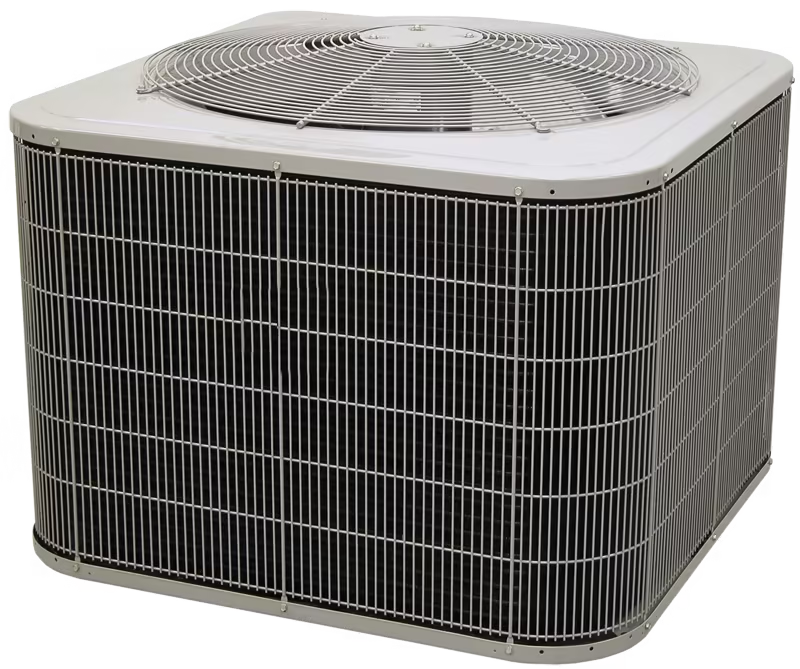
A company like A/C Man Heating and Air earns trust when it treats each project as a site-specific job rather than a routine transaction. That approach matters most when the job is not simple, which is often the case with renovations and custom new homes. The more a contractor understands the home, the better the result tends to be.
When repair, replacement, and maintenance overlap
Not every project starts with a blank slate. Sometimes a homeowner calls about a remodel, but the existing system is already failing. Other times the new home is nearly complete, but the equipment needs adjustments after the first season of use. In those situations, the line between AC Repair in Fayetteville and full installation can blur. That is normal. What matters is choosing the option that solves the actual problem instead of masking it.
If a system is young and only has a single failed part, repair may be the sensible choice. If the unit is older, inefficient, or mismatched to the home, pouring money into repeated service calls can be the expensive path. Good contractors are honest about that. They do not need to push replacement every time a compressor struggles, but they also should not pretend a 15-year-old system is healthy when it has already shown clear signs of decline.
Maintenance fits into that same conversation. A newly installed system should be protected with regular care, especially after the first season of settling in. Dust, construction debris, and normal use can all change how the system performs. A maintenance visit can catch small issues before they become expensive ones. That is particularly useful after a renovation, when a house has been exposed to extra dust and traffic. It is also a smart habit for new homeowners who want the system to last as long as possible.
Choosing comfort that lasts
The right AC installation does more than cool a house. It supports the way the home is actually used. It keeps bedrooms comfortable at night, keeps main living spaces steady through the afternoon, and handles humidity without creating a cold-but-damp feeling. It also respects the budget, because an efficient, well-matched system should not punish the homeowner every time the weather turns hot.
For new homes, the opportunity is to start with a clean slate and build a system that fits the structure, the lifestyle, and the local climate. For renovations, the opportunity is to correct old compromises and make the remodeled space live better than before. In both cases, the smartest move is to work with an HVAC contractor in Fayetteville who asks the right questions, explains the options honestly, and treats the installation as a design problem, not just a delivery job.
Comfort should not be a guessing game. When AC installation in Fayetteville is handled with care, the result is a home that feels finished in the way that matters most, quietly, consistently, and without constant adjustment. That is the standard worth aiming for, whether you are building from the ground up or giving an older house the upgrade it has needed for years.
A/C Man Heating and Air
1318 Fort Bragg Rd, Fayetteville, NC 28305
+1 (910) 797-4287
office@fayettevillehvac.com
Website: https://fayettevillehvac.com/