
AC Repair in Fayetteville: Dealing with Refrigerant Leaks Safely
Refrigerant leaks are one of the quiet failures that turn a comfortable home into a humid, noisy place and push your energy bill upward. If you live in Fayetteville, the long, humid summers make reliable air conditioning essential. I repair dozens of systems each season, and I have seen the same pattern: a unit struggles, noise appears, cooling fades, and the homeowner assumes the compressor is failing. Often the real culprit is refrigerant loss. Knowing how to spot a leak, when to call a technician, and what to expect during repair keeps you safer and saves money.
Why this matters Leaking refrigerant changes how an AC operates. Low charge forces the compressor to work harder, which shortens its life and raises operating costs. Refrigerant itself is regulated, so handling it incorrectly invites environmental harm and legal trouble. Acting early preserves comfort, https://www.google.com/maps?cid=8980889172433144635 keeps the system efficient, and prevents a small problem from becoming a major replacement.
How refrigerant affects cooling performance Refrigerant moves heat; without the right amount in the right place, there is no heat transfer. When the charge is low, evaporator coil temperatures drop unpredictably, but rather than producing more cold air, the coil can frost over and restrict airflow. That makes the blower work harder and makes the compressor cycle irregularly. Homeowners notice warm air, weak airflow, and short cycling. Technicians see pressure readings that do not match ambient temperature, and they trace lines and evaporator surfaces to find where gas is escaping.
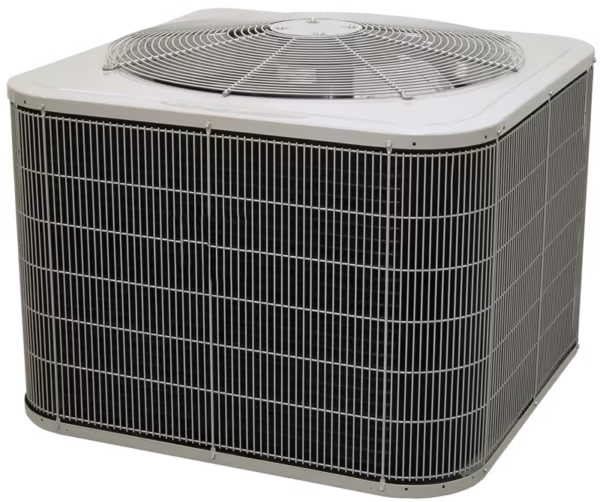
Common signs that a leak is present If you want a short field checklist to decide whether to call for AC Repair in Fayetteville, watch for these signals inside your home and at the outdoor unit. Each one alone is not definitive; together they point strongly to a refrigerant problem.
When those signs line up, stop guessing and call a licensed technician. Trying to top up refrigerant without finding the leak wastes money and masks the underlying fault.
What causes refrigerant leaks Pipes and components last for years, but they are not immune to failure. Mechanical vibration loosens brazed joints at line sets. Corrosion eats copper where moisture accumulates. Poor initial installation leaves fittings under stress. Small pinhole leaks develop where microscopic debris abrades a line, or where refrigerant oil carries contaminants to a vulnerable joint. Rarely, manufacturing defects in valves or evaporator cores can cause leaks early on. In Fayetteville, repeated thermal cycling across hot summers and cool winters accelerates material fatigue. If the outdoor unit sits where salt or chemicals are used, corrosion risk increases.
Safety and regulatory considerations Refrigerants are not ordinary fluids. Many modern refrigerants are classified as regulated substances and must be recovered, recycled, or reclaimed by certified technicians. There are three practical constraints you need to respect.
First, do not attempt to open the refrigerant circuit yourself unless you are licensed. Releasing refrigerant into the atmosphere is illegal and harmful. Second, some older homes still run equipment charged with R-22, a refrigerant that has been phased out for new production. Repairs involving R-22 are more costly because supplies are limited and reclaimed product is pricier. Third, handling pressurized refrigerant requires proper personal protective equipment and tools calibrated to measure pressures and detect small leaks.
What to expect when you call for AC Repair in Fayetteville When you call a reputable local company, expect a technician to ask a few screening questions before arrival: age of the system, symptoms, whether the compressor runs, and any visible oil stains near lines or the outdoor unit. On site, a typical diagnostic sequence follows these steps in practical terms.
First, visual inspection. The technician looks for obvious oil residue along line sets and fittings, checks for corrosion on the outdoor coil and connections, and inspects the evaporator access panel for frost. Second, pressure testing with gauges. The tech will compare suction and discharge pressures to expected values for the ambient temperature and refrigerant type. Third, leak detection. This usually involves a combination of electronic sniffer probes and ultraviolet dye when appropriate; bubble testing is used for low-pressure or accessible joints. Fourth, repair planning. Some leaks are repairable at accessible joints. Others require replacing sections of copper, brazing new fittings, or replacing an entire evaporator coil or condenser coil when the leak is internal and inaccessible. Finally, the tech will evacuate the system to remove air and moisture, recharge with the specified refrigerant, and verify performance.
When a repair is straightforward I once replaced a failed service valve seal on a 10-year-old system in one afternoon. The homeowner noticed warm air and a faint hissing sound near the outdoor compressor. Visual oil staining pinpointed the service valve. We replaced the seal, vacuumed the system, and recharged to manufacturer specs. The unit returned to original efficiency, and the owner saved the cost of a coil replacement. Repairs like this are straightforward when they are accessible and when the compressor and coils are otherwise healthy.
When replacement is the right choice Sometimes repair is a false economy. If the evaporator core has multiple pinhole leaks or the condenser coil is heavily corroded, sealing every leak may not stop fresh ones from appearing. If the compressor has been starved of oil because of repeated low-charge operation, it may fail soon even after a recharge. Age matters. For systems older than 12 to 15 years, replacing the entire outdoor unit or the entire system can be more cost-effective when you factor in efficiency gains, refrigerant availability, and remaining service life. I advise clients to weigh immediate repair cost against expected remaining years of reliable operation and seasonal energy savings.
Managing R-22 and conversions Homes with older equipment often still use R-22. Because R-22 production ended for most uses years ago, reclaimed R-22 is more expensive and may be scarce. Two paths exist when your system needs refrigerant service. One, recharge with reclaimed R-22 if you want to keep the original system and the cost is acceptable. Two, replace the entire outdoor unit and convert the system to a modern refrigerant such as R-410A or other manufacturer-approved alternatives. Conversion often requires changing the compressor, expansion device, and sometimes the evaporator coil, because different refrigerants operate at different pressures. Conversion is a larger upfront expense, but it avoids future uncertainty about refrigerant availability and generally improves efficiency.
Cost expectations and return on investment Costs vary widely. A simple seal replacement and recharge might run a few hundred dollars. Replacing a section of copper and brazing a joint can be several hundred. Swapping a failed coil or an outdoor condenser assembly can run into the thousands. Conversion from R-22 to a modern refrigerant, with necessary component changes, typically equals or exceeds the cost of a new condenser and often pushes homeowners toward full replacement.
Think of this as financial triage. If the repair costs less than half the value of a new system and the existing system has at least five good years left, repair makes sense. If the repair approaches the price of new equipment or the system is near the end of its expected life, replacement is the more persuasive route.
Practical steps you can take while waiting for service There are a few safe actions that reduce stress on your system before a technician arrives. The list below keeps things simple, clear, and actionable.
Why documentation and photos matter When a technician arrives, a short history saves diagnostic time. Note when symptoms began, whether they are constant or intermittent, and any recent work done to the system or nearby construction that might have disturbed lines. Take photos of the outdoor unit, especially the line set connections and the status of electrical components. Technicians appreciate this because it lets them prepare with the right parts, which reduces time on site and often reduces cost.
Choosing the right technician in Fayetteville Licensing and certification are nonnegotiable. Look for technicians who are certified to handle refrigerants and who show proof of liability insurance. Ask whether the company performs refrigerant recovery and whether they use properly calibrated gauges and leak detectors. A good company explains repair options, provides a clear written estimate, and discusses warranty for parts and labor. Beware of firms that offer suspiciously low prices for refrigerant only; if they top up without locating the leak, you will be back with the same problem.
Trade-offs: repair now or delay Repair now preserves system components and saves energy; delaying increases the risk of compressor failure and a larger bill. If the leak is minor and the system is relatively new, a repair is a clear win. If the leak is extensive and the system is old, replacement avoids repeated service calls and uses refrigerant that will be easier to obtain. I help clients model both paths: immediate cost, expected longevity, and estimated cooling efficiency after repair or replacement. Those numbers, combined with how long they plan to stay in the home, guide the decision.
Real-world examples from Fayetteville homes A rental property I manage had seasonal complaints about weak cooling. Tenants rotated filters but the unit still struggled. The tech found a slow leak at the brazed joint where the line set enters the house. The fix required cutting a short section of line and brazing a new fitting, then evacuating and recharging. Doing the repair in one visit saved on repeated service calls and tenant discomfort. In another case, a homeowner delayed addressing a leak for two seasons. The compressor failed, and because the system used an older refrigerant, repair costs exceeded 70 percent of a modern replacement. Replacement proved the right choice.
Preventing future leaks Prevention begins at installation and continues with regular maintenance. Proper line set support reduces vibration. Insulating lines and routing them to avoid heat and chemical exposure reduces corrosion. Annual tuneups that include pressure checks and leak screening catch small problems early. If you live on a busy road where airborne grit or road salts accumulate, regular cleaning of the outdoor coil and application of protective coatings at vulnerable fittings can extend life. These are simple measures, but they pay back in fewer leaks and lower energy bills.

Final practical tips for households Keep paperwork for your HVAC system handy. The model number, installation date, and previous service records help technicians diagnose faster. Ask your technician for a basic leak-detection schedule if https://fayettevillehvac.com/ you have an older unit. If you are selling a home, disclose any known refrigerant issues and the service performed; transparency avoids liability and speeds sale.
When you need AC Repair in Fayetteville, call sooner rather than later Leaking refrigerant is not a minor inconvenience; it is a risk to system health and home comfort. A prompt, professional response reduces downtime, protects the compressor, and preserves efficiency. When you see multiple signs of low charge or detect oil stains and hissing, it is time to call a certified technician. The right choice balances immediate repair cost with expected remaining life and energy savings. In Fayetteville, with long stretches of heat and humidity, timely AC Repair in Fayetteville keeps your home comfortable and your system running cleanly for years.
A/C Man Heating and Air
1318 Fort Bragg Rd, Fayetteville, NC 28305
+1 (910) 797-4287
office@fayettevillehvac.com
Website: https://fayettevillehvac.com/