
Energy-Saving Tips from A/C Man Heating and Air in Fayetteville
Summer in Fayetteville arrives fast and thick, the kind of heat that makes you appreciate efficient climate control. Over years of installing, repairing, and tuning systems for homes across the city, I have learned that saving energy is rarely a single trick. It is a collection of small choices, timed maintenance, and a few upgrades that pay for themselves. This piece pulls together practical, field-tested strategies that deliver real savings without sacrificing comfort. Expect concrete numbers, trade-offs, and the kind of judgment calls technicians make on site.
Why this matters Electric bills in Fayetteville can spike in the hottest months. A single poorly tuned system can add 10 to 30 percent to seasonal energy use compared with a maintained unit of the same age. That margin is real money for homeowners and real wear on equipment. Fixing inefficiency is both a cost-saving and lifespan-extending move. With proper attention, many customers see monthly energy reductions between $40 and $150 during peak summer, depending on their home and usage patterns.
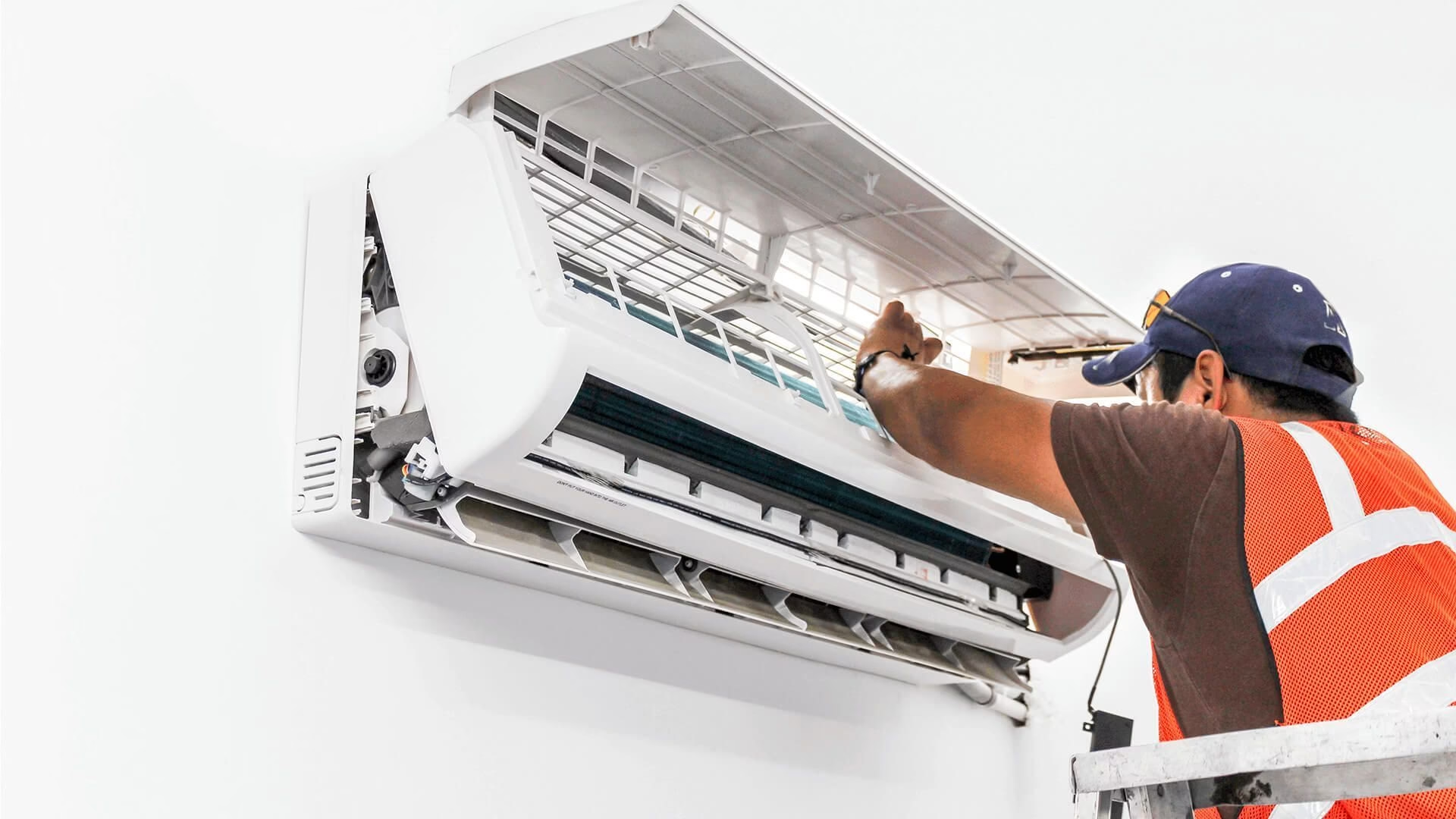
Start with the system you have Before you spend on upgrades, squeeze savings from what’s already there. The most common issues I encounter are dirty filters, restricted airflow, and inaccurate thermostats. A dirty filter increases energy consumption because the blower motor works harder to push air, and the system spends more time running to reach setpoint. A simple filter change every 30 to 90 days, depending on pets and dust, can cut runtime significantly.
Airflow problems often show up as uneven temperatures, short cycling, or freezing evaporator coils. Tight registers, undersized return pathways, and collapsed duct sections restrict airflow. During a typical service call I will measure static pressure and check return grilles. If static pressure is high, you get lousy heat transfer and the compressor runs inefficiently. Addressing basic airflow issues can improve efficiency by up to 15 percent in some homes.
Thermostat accuracy matters more than people expect. A thermostat that reads 2 to 3 degrees off will force the system to run longer. Upgrade to a programmable or smart thermostat if you want better scheduling and remote adjustments. Even a basic seven-day programmable unit can reduce cooling costs by roughly 10 percent if you set it to raise the setpoint while the house is empty.
Timing and behavior that add up Small behavior changes add up faster than one-off investments. Running a ceiling fan allows you to raise the thermostat 3 to 4 degrees with no loss of comfort in occupied rooms. Fans move air and create a wind-chill effect on people's skin, though they should be turned off when rooms are empty to avoid wasted energy.
Use curtains, blinds, and awnings strategically. South- and west-facing windows bring in the most heat in summer. Closing blinds during midday can reduce solar heat gain substantially. On a typical Fayetteville summer day, blocking direct afternoon sun can reduce cooling load by several hundred watts per square foot of exposed glazing.
Laundry and cooking habits matter. Running the dryer and oven during evening hours reduces peak demand on the A/C, and using the dryer with moisture sensor cycles or running appliances when the house is unoccupied both trim overall runtime. Swap incandescent bulbs for LEDs; they produce less heat and use a fraction of the energy.
When to call for AC repair in Fayetteville Knowing when to call a professional prevents small problems from becoming large ones. Have a technician inspect your system annually, ideally in spring. Call immediately if you notice weak airflow, unusual noises, frequent cycling, or moisture near the indoor unit. Ignoring these signs accelerates wear and can lead to compressor failure, which is the most expensive single repair on a traditional split system.
A/C Man Heating and Air performs diagnostics that go beyond quick fixes. We check refrigerant charge, measure subcooling and superheat, verify electrical connections, and test airflow. Undercharged or overcharged systems lose efficiency and risk mechanical stress. Proper refrigerant level alone can affect energy use by 5 to 20 percent.
When repairs annual AC maintenance Fayetteville are needed, choose parts and procedures that restore efficiency, not just function. For example, replacing a failing capacitor or an inefficient blower motor with a high-efficiency ECM motor can cut blower energy use dramatically and improve overall system performance.
Ductwork: the often-overlooked savings opportunity In many Fayetteville homes, ducts are the low-hanging fruit. Leaky ducts in attics and crawlspaces can lose 20 to 40 percent of the conditioned air before it reaches living spaces. The easiest first step is a visual inspection for disconnected ducts, torn insulation, and obvious air leaks around register boots.
Sealing ducts with mastic or UL 181-rated foil tape is durable and effective. Fiberglass duct insulation helps, but sealing leaks is the core action. In tight-duct homes you will notice steadier temperatures and lower run times. For homes with significant duct work issues, sealing and insulating can reduce cooling bills by 10 to 30 percent. The trade-off is the upfront cost and the need for access in attics or crawlspaces.
Consider a professional duct test if the system feels marginal. A blower door or duct blaster AC Repair Fayetteville A/C Man Heating and Air test quantifies leakage and helps prioritize repairs. During a duct job, we also look at return pathways and balance dampers so the system breathes correctly. Balanced airflow will reduce static pressure, improve coil performance, and shorten cycles.
Upgrade paths that make sense Not every upgrade pays back quickly. The decision depends on your system age, repair history, and how long you plan to stay in the house. Here are practical upgrade options that often justify their cost.
One: SEER improvements. Replacing an old 10 SEER unit with a modern 16 or 18 SEER model usually delivers 20 to 30 percent better efficiency, but the payback depends on your cooling load and local electricity rates. If your system is older than 12 to 15 years and repairs are frequent, the math often favors replacement.
Two: high-efficiency variable-speed compressors. These provide smoother temperature control and lower peak draws. They cost more up front but deliver better humidity control and lower energy use, especially in mild weather when full capacity is unnecessary.
Three: high-efficiency programmable thermostats. These are low-cost with immediate returns through smarter scheduling. Some models also integrate with zoning controls or multiple sensors to avoid temperature stratification.
Four: ductless mini-split systems for additions or rooms with no ductwork. Mini-splits are efficient and can be zoned easily, ideal for bonus rooms or partial house solutions.
Five: attic insulation. Increasing attic insulation to R-38 or higher can significantly reduce heat gain into the conditioned envelope, lowering cooling needs. Attic insulation improvements pay back in energy savings and provide year-round comfort.
Weighing trade-offs is critical. For example, a variable-speed system reduces humidity better but requires higher initial investment and potential changes to electrical supply. Duct sealing saves money but may reveal poorly sized equipment that will still struggle if the system was undersized to begin with.
Humidity control that actually saves energy Fayetteville’s summers bring both heat and humidity. High humidity makes indoor spaces feel warmer, prompting occupants to lower thermostats and run A/C longer. Dehumidification reduces runtime because the perceived temperature drops.
Whole-house dehumidifiers can be installed with existing systems. In many cases, improving airflow and coil performance reduces humidity without additional equipment. If humidity is extreme, a dedicated dehumidifier is worth considering, particularly for homes with long run-times or comfort complaints. Expect a whole-house unit to cost several hundred to a few thousand dollars installed, with operating costs that vary by use. The benefit is less runtime for the cooling system and improved comfort.
Simple maintenance tasks you can do Some maintenance does not require a service call and saves money immediately. Here are five practical items to check and maintain yourself.
- change or clean filters regularly, at intervals recommended by the manufacturer and more often if you have pets.
- keep the outdoor condenser free of debris, leaves, and grass clippings; maintain at least two feet of clearance.
- inspect and clear condensate drains to prevent clogs and moisture damage.
- check thermostat batteries and settings, confirm the fan setting is on auto rather than on.
- make sure vents and returns are not blocked by furniture or drapes.
These actions cost little and prevent many common service calls. If you find a more serious problem while doing these checks, document what you observed for the technician who responds.
When replacement is inevitable Deciding to replace rather than repair involves age, efficiency, and projected future repairs. If the unit is over 12 years old and a repair will cost more than roughly 30 to 40 percent of a replacement cost, replacement is typically the better long-term value. Also consider whether your system struggles to keep up at certain outdoor temperatures. If so, upgrading to a more appropriately sized unit can reduce runtime and improve comfort.
Work with a contractor who explains total installed cost, estimated seasonal energy use, and realistic payback scenarios. A trustworthy provider will perform load calculations, not just pull the old tonnage and match it. Proper sizing matters. Oversized systems short cycle and do a poor job of dehumidifying. Undersized systems run constantly and fail prematurely.
Choosing the right contractor for AC repair in Fayetteville Selecting a contractor matters as much as choosing equipment. Look for technicians who show up on time, explain their findings, and provide written estimates. Ask whether the company uses factory-authorized parts and whether their technicians have ongoing training. A contractor should be able to explain measured values like static pressure and refrigerant charge, not just give a gut opinion.
Local knowledge is valuable. A company that has worked in Fayetteville for years understands roof constructions, attic insulation norms, and the typical duct paths in local homes. A name homeowners in town have recommended, such as A/C Man Heating and Air, signifies a track record. Expect references and examples of previous jobs, and look for clear service agreements and warranties.
Real examples from the field A customer in west Fayetteville had a 20-year-old system with erratic cooling and a $300 monthly bill during July and August. We found the evaporator coil heavily fouled, ducts leaking into an uninsulated attic, and the system undercharged on refrigerant. After coil cleaning, duct sealing, and proper refrigerant charge, the system ran 35 percent less during peak months and the customer saw an average monthly savings of about $115.
Another household converted an unused second living room into a home office and installed a mini-split instead of extending ductwork. The mini-split cost more per square foot than a simple duct extension, but it provided targeted cooling for the office, reduced whole-house cooling runtime, and improved occupant comfort without overworking the main system.
Financial incentives and timing Look for rebates and utility programs that offset upgrade costs. Local utilities sometimes offer rebates for high-efficiency equipment, smart thermostats, and duct sealing. Timing upgrades to take advantage of tax credits or seasonal promotions reduces upfront cost. Ask your contractor to include available rebate amounts in the estimate.
Plan major work for spring or fall when technicians are less busy. Not only do you avoid peak-season delays, but pre-season maintenance ensures your system enters the cooling season tuned and ready.
A practical roadmap for action If you want a clear plan, start with a spring service check: filter, coils, refrigerant, electrical, and airflow measurements. Seal ducts and add insulation where necessary. Then take behavioral steps: raise the thermostat 3 degrees when away, use fans for occupied rooms, and block afternoon sun. If the system is old or struggling, get replacement estimates including SEER comparisons and payback scenarios. Finally, pick a contractor who documents measured performance and stands behind their work.
Saving energy while preserving comfort is a balancing act. Small fixes yield quick returns and reduce the need for expensive interventions. Bigger investments are justified when equipment reaches the end of reliable life or when your usage patterns change. A careful, measured approach keeps the house comfortable, the system healthy, and the bills lower. If you need help diagnosing a problem or want a realistic estimate for upgrades, reach out to local professionals experienced with Fayetteville homes and ask for a detailed, measured assessment. A single well-executed service call often pays for itself in comfort and savings.
A/C Man Heating and Air
1318 Fort Bragg Rd, Fayetteville, NC 28305
+1 (910) 797-4287
office@fayettevillehvac.com
Website: https://fayettevillehvac.com/